

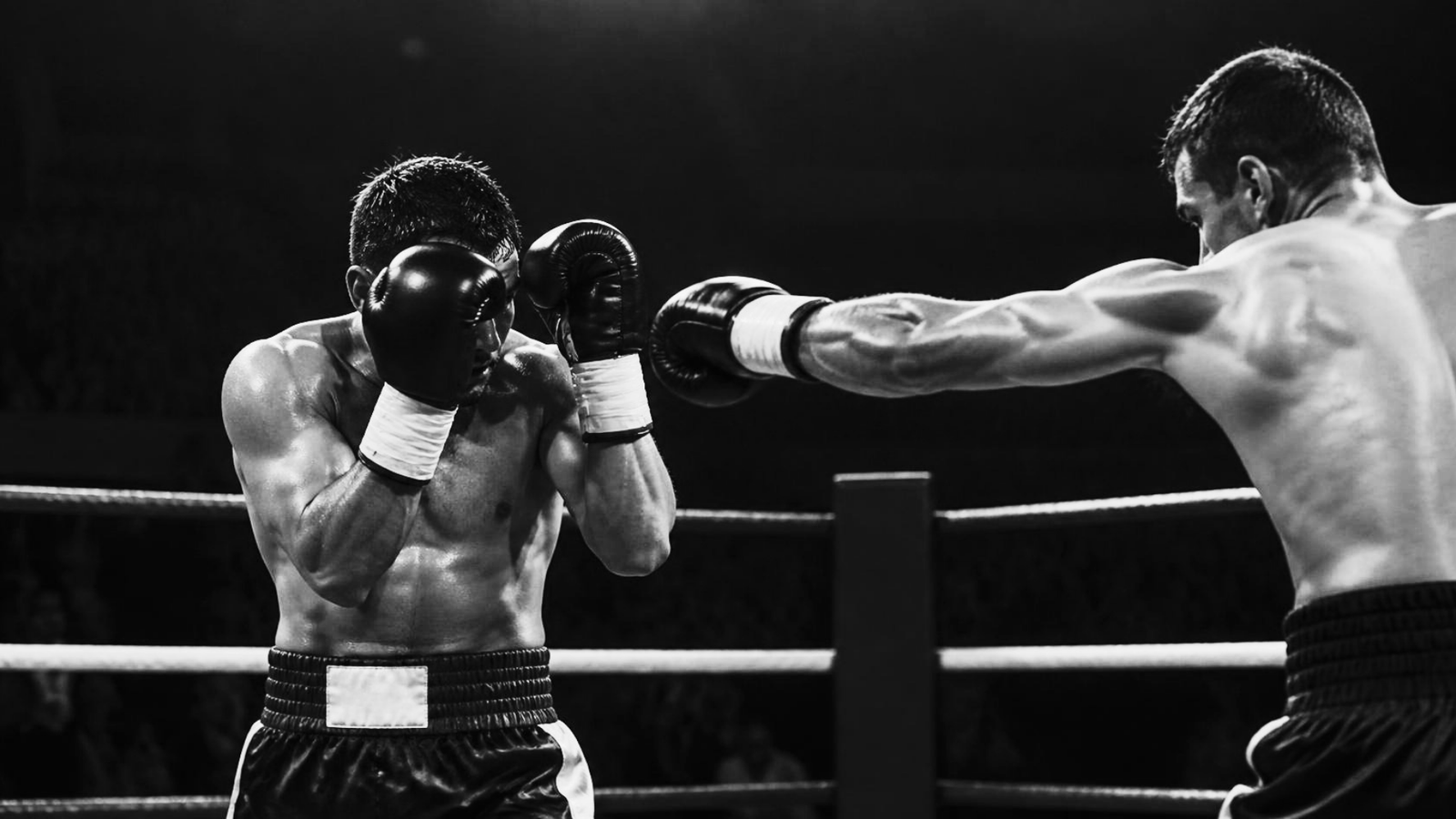
Great Trading Begins With Great Defense
MARKET MINDSET
Editorial Journal on Capital Markets, Investment Psychology & Professional Decision-Making
An Editorial by Debaditya Chatterjee
Editor, Market Mindset
Capital Markets Educator | Helping Market Participants Think Like Professionals | Trader & Investor | Market Psychology | Trading Discipline | Capital Markets Research
“The most important rule of trading is to play great defense, not great offense.”
— Paul Tudor Jones
Trading is often described as a game of finding opportunities.
Catch the breakout.
Ride the trend.
Find the next big move.
Maximise the return.
But with enough time in the market, another lesson becomes difficult to ignore:
Making money matters.
Keeping enough capital, discipline and clarity to continue making decisions matters even more.
That is the deeper meaning behind Paul Tudor Jones’s emphasis on defense.
Great trading is not simply about knowing when to attack.
It is about knowing when to protect yourself.
THE MARKET DOES NOT REWARD COURAGE ALONE
A trader can have strong conviction and still be wrong.
They can conduct extensive research and still misread the market.
They can correctly identify the direction and still lose money because the position was too large, leverage was excessive or the timing was wrong.
Markets do not reward effort.
They reward decisions made under uncertainty.
That is why professional trading cannot be built around prediction alone.
It requires another question:
What happens if I am wrong?
That question is where defense begins.
RISK MANAGEMENT IS NOT A BRAKE ON RETURNS
Risk management is sometimes perceived as something that limits opportunity.
But consider the mathematics of losses.
A 10% loss requires approximately 11.1% to recover.
A 20% loss requires 25%.
A 30% loss requires approximately 42.9%.
A 50% loss requires 100%.
The deeper the drawdown, the more difficult recovery becomes.
This is why capital preservation is not the enemy of growth.
It is what makes long-term participation possible.
Defense does not mean eliminating risk.
It means preventing risk from becoming destructive.
PROTECT THE ABILITY TO MAKE THE NEXT DECISION
This is perhaps one of the most overlooked ideas in trading.
Capital is not merely money.
It is also decision-making capacity.
After a significant loss, traders often lose something else:
Patience.
Confidence.
Objectivity.
Flexibility.
The ability to wait.
A ₹1 lakh loss can quickly become:
“How do I make it back?”
That question can change behaviour.
Position sizes increase.
Trades become more frequent.
Lower-quality setups become acceptable.
Leverage starts looking attractive.
The trader is no longer simply trading the market.
They are trying to repair the previous trade.
That is how one mistake can become a cycle.
Good defense breaks that cycle.
POSITION SIZING IS ALSO PSYCHOLOGY
Two traders can take exactly the same trade and experience completely different outcomes psychologically.
One risks 0.5% of capital.
Another risks 8%.
The market behaves identically.
Their minds do not.
The first trader may be able to observe the position objectively.
The second may become emotionally attached to every price movement.
Every tick matters.
Every headline matters.
Every reversal creates anxiety.
Eventually, the problem may not be the strategy.
The position may simply be too large for the trader’s psychological capacity.
Position sizing should therefore answer two questions:
How much can I afford to lose?
And:
How much can I lose without losing my discipline?
The second question is often neglected.
DEFENSE STARTS BEFORE THE TRADE
Professional risk management does not begin after entering a position.
It begins before the entry.
Ask:
What exactly is my thesis?
What evidence supports it?
What would invalidate it?
Where will I exit if the thesis fails?
How much capital am I risking?
Is the position size appropriate?
What happens if the market gaps against me?
Could several positions lose simultaneously?
Am I using leverage because the opportunity demands it—or because I want a larger return?
These questions may make trading less exciting.
That is precisely why they are valuable.
They force us to confront risk before emotion becomes attached to capital.
A STOP-LOSS IS NOT THE WHOLE DEFENSE
A stop-loss can be useful.
But a stop-loss alone is not a risk-management system.
Markets can gap.
Liquidity can disappear.
Volatility can expand.
Execution can differ from expectations.
Correlations can rise during periods of stress.
A portfolio that appears diversified in normal conditions can suddenly behave like one large position.
This becomes particularly important in derivatives.
Options involve more than direction.
Time decay, implied volatility, strike selection and position size can all influence the outcome.
Futures introduce leverage and margin considerations.
Therefore, defense has to exist at several levels:
Trade level: What happens if this setup fails?
Position level: How much capital is exposed?
Portfolio level: What happens if several positions fail together?
Psychological level: Can I execute the plan when the market becomes uncomfortable?
A professional approach considers all four.
THE MOST DANGEROUS TRADE MAY BE THE ONE YOU NEED TO WIN
There is a major psychological difference between:
“I hope this trade works.”
and:
“I need this trade to work.”
The second is dangerous.
Once a trade becomes emotionally or financially necessary, objectivity begins to deteriorate.
The trader stops evaluating evidence.
They start defending the position.
The market becomes an opponent.
Loss becomes unacceptable.
And once loss becomes unacceptable, rational decision-making becomes difficult.
No single trade should become important enough to threaten your ability to think clearly.
That is defense.
BEING RIGHT IS NOT ENOUGH
Imagine a trader correctly predicts that a stock will eventually move from ₹500 to ₹800.
The thesis is right.
But before reaching ₹800, the stock falls to ₹400.
A heavily leveraged trader may be forced out at ₹400.
The stock later reaches ₹800.
The trader was right about the destination.
The trade still failed.
This distinction is fundamental.
Being right about the destination does not guarantee surviving the journey.
Trading is not simply about where price eventually goes.
It is also about the path it takes to get there.
That is why position sizing, leverage, liquidity and time horizon matter.
DEFENSE CREATES OPTIONALITY
Capital preservation creates something that is difficult to measure:
Freedom.
A trader with capital and discipline can wait.
They can observe.
They can reassess.
They can participate when a high-quality opportunity appears.
A trader who has suffered a severe drawdown may no longer have that freedom.
Every subsequent trade carries additional pressure.
This is why sometimes the most valuable position is no position at all.
Missing an opportunity is often cheaper than forcing one.
The market will provide another setup.
Capital destroyed through reckless risk-taking cannot simply be assumed to return.
THE PSYCHOLOGY OF REVENGE TRADING
A trader loses ₹20,000.
The immediate thought is:
“I need to make it back.”
The next trade is now psychologically different.
It is no longer just a market decision.
It has become an attempt to repair an emotional loss.
The trader may increase frequency.
Accept weaker setups.
Increase position size.
Move away from the original process.
The objective quietly changes from:
“Make a good decision.”
to:
“Recover the money.”
This is where defense becomes psychological rather than mathematical.
Accept the loss.
Separate it from the next decision.
Return to the process.
The market does not owe us recovery.
It only offers another opportunity to make a decision.
DEFENSE DOES NOT MEAN FEAR
This distinction matters.
Fear says:
Do not take risk.
Professional defense says:
Take only the risk you understand and can survive.
A trader who never takes risk cannot participate meaningfully in markets.
A trader who takes unlimited risk cannot remain in markets indefinitely.
The objective is neither extreme.
It is calculated risk.
Defined downside.
Sufficient staying power.
WHAT SHOULD A TRADER DEFEND?
Capital is the obvious answer.
But a professional trader should defend much more.
Decision quality.
Do not allow one loss to dictate the next trade.
Attention.
Do not allow every headline to change your thesis.
Discipline.
Do not abandon your process because of one outcome.
Time.
Do not spend every market hour searching for something to trade.
Reputation.
Do not make promises about returns that markets cannot guarantee.
Learning capacity.
Do not become so attached to being right that you stop learning.
And ultimately:
The ability to remain in the game.
A FIVE-QUESTION DEFENSIVE FRAMEWORK
Before taking a trade, ask yourself:
1. What am I betting on?
Define the thesis clearly.
If you cannot explain it simply, perhaps you do not understand it well enough.
2. What could make me wrong?
Identify invalidation before entering.
Do not invent the exit after the position begins losing.
3. How much can I lose?
Define the financial risk.
Then ask whether you can genuinely accept it.
4. What happens if I am wrong repeatedly?
One losing trade is normal.
Several consecutive losses are possible.
Your process must be designed for that reality.
5. Will I still be able to take the next good opportunity?
This may be the most important question of all.
If one trade can materially impair your ability to participate tomorrow, the position may be too large today.
DEFENSE IN OPTIONS AND DERIVATIVES
The importance of defense becomes even clearer in leveraged instruments.
An options trader can correctly anticipate a bullish move and still lose because:
The move happened too slowly.
Implied volatility declined.
Time decay eroded the premium.
The strike selection was inappropriate.
The position was oversized.
The underlying moved in the expected direction but not far enough.
This is why derivatives trading requires more than directional conviction.
The relevant question is not simply:
“How much can this trade make?”
It is:
“What conditions can damage this position, and how much capital am I prepared to expose to those conditions?”
That is defensive thinking.
THE MARKET WILL ALWAYS OFFER ANOTHER OPPORTUNITY
If a trade fails, another opportunity will eventually appear.
If a breakout is missed, another breakout will occur.
If a stock rises without us, another stock will move.
If a particular setup fails, another setup will emerge.
But capital lost through reckless risk-taking cannot simply be assumed to return.
And time lost through emotional decision-making cannot be recovered.
Therefore, missing an opportunity is often cheaper than forcing one.
Patience is not inactivity.
Sometimes patience is risk management.
FROM THE EDITOR’S DESK
The longer I remain around markets—as a trader, investor and educator—the more I appreciate the wisdom of restraint.
Markets constantly encourage us to think about what we could make.
Perhaps we should spend more time thinking about what we could lose.
Not because fear should dominate our decisions.
But because survival creates opportunity.
Every trader will experience losing trades.
Every strategy will encounter adverse conditions.
Every market participant will eventually face a period when the market behaves differently from what they expected.
The question is not whether that period will arrive.
It will.
The question is whether we have prepared for it.
Paul Tudor Jones’s emphasis on defense therefore goes much deeper than a stop-loss or a risk percentage.
It is a philosophy of staying power.
Protect your capital.
Protect your decision-making.
Protect your discipline.
Protect your objectivity.
Protect your ability to participate tomorrow.
Because markets do not run out of opportunities.
But traders can run out of capital, confidence and clarity.
And perhaps that is the real meaning of great defense:
You do not defend because you expect to lose.
You defend because you intend to remain in the game long enough to win.
ABOUT THE EDITOR
Debaditya Chatterjee is the Editor of Market Mindset, an editorial publication focused on capital markets, investment psychology and professional decision-making.
As a Capital Markets Educator, Trader & Investor, he writes about market psychology, technical analysis, derivatives, risk management, trading discipline and evidence-based decision-making to help market participants develop professional thinking.
EDITORIAL DISCLAIMER
This editorial is published solely for educational and informational purposes. Nothing contained in this publication should be interpreted as investment advice, research recommendations or an offer to buy or sell any financial instrument.
Readers should conduct their own independent research and consult qualified financial professionals before making investment decisions.